
Contents
Overview
Evidence suggests the use of companion planting in ancient Mesoamerican cultures and the development of Asian forest gardens. Early agriculturalists observed natural plant communities and began to replicate these beneficial associations in their own plots. For instance, the "Three Sisters" method, a traditional Native American polyculture of corn, beans, and squash, exemplifies this ancient wisdom. Corn provides a stalk for beans to climb, beans fix nitrogen in the soil benefiting all three, and squash's broad leaves shade the ground, conserving moisture and suppressing weeds. This holistic approach to cultivation predates modern scientific understanding but was integral to the survival and prosperity of many indigenous societies. The rediscovery and popularization of these techniques in the 20th century owe much to organic gardening pioneers who sought to work with nature rather than against it, laying the groundwork for contemporary sustainable agriculture.
⚙️ How It Works
Companion planting operates on several interconnected principles, creating a symbiotic environment within the garden. Pest deterrence is a common strategy, where certain plants emit scents that repel common garden pests from their neighbors. For example, basil is often planted near tomatoes to deter tomato hornworms and whiteflies, while marigolds are known to deter nematodes in the soil. Attracting beneficial insects is another key mechanism; flowering plants like dill or fennel can draw in predatory insects such as ladybugs and lacewings, which then prey on pest populations. Maximizing space and resource utilization is also crucial, especially in smaller gardens. Taller plants can provide shade for sun-sensitive crops, while deep-rooted plants can bring nutrients to the surface for shallow-rooted neighbors. Nitrogen-fixing legumes, like beans and peas, enrich the soil, providing essential nutrients for neighboring plants, a concept central to sustainable soil management. This intricate web of interactions fosters a more resilient and productive garden ecosystem.
📊 Key Facts & Numbers
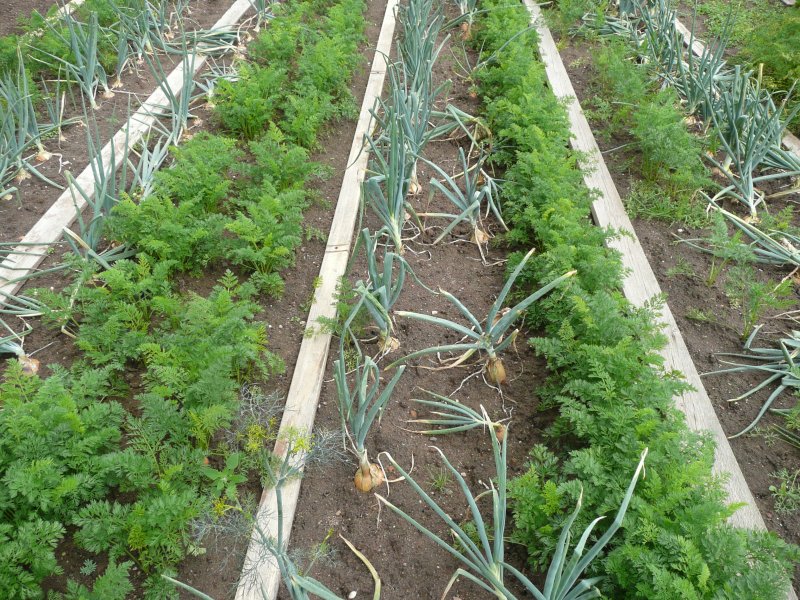
Globally, an estimated 70% of farmers utilize some form of polyculture, with companion planting being a significant component. Studies have shown that well-planned companion planting can increase crop yields by up to 20% for certain species. For instance, intercropping carrots with rosemary has been reported to increase carrot yields by 15% while simultaneously deterring the carrot rust fly. The market for organic pesticides, which companion planting helps reduce reliance on, was valued at over $4.5 billion in 2022 and is projected to grow significantly, underscoring the economic incentive for sustainable practices. In community garden settings, which often prioritize resource efficiency, companion planting is a popular strategy, with over 60% of urban gardeners reporting its use to maximize small plots. The biodiversity fostered by companion planting can support up to 30% more beneficial insect species compared to monoculture plantings.
👥 Key People & Organizations
While companion planting is a practice rather than a singular invention, several figures and organizations have championed its principles. Ruth Stout advocated for simple, natural gardening methods that included intercropping and mulching, though not explicitly termed 'companion planting' in her early works. The Rodale Institute, a leading research organization in organic agriculture, has extensively studied and promoted polyculture systems, including companion planting, since its founding in 1947. Modern proponents like Eliot Coleman, a renowned organic farmer and author, integrate companion planting into intensive, year-round growing systems, demonstrating its viability even in challenging climates. Organizations such as the Xerces Society for Invertebrate Conservation also advocate for practices that support beneficial insects, which are often enhanced through thoughtful companion planting choices.
🌍 Cultural Impact & Influence
The influence of companion planting extends beyond the garden plot, shaping perceptions of agriculture and sustainability. It has become a cornerstone of the permaculture movement, emphasizing the design of human settlements and agricultural systems modeled on the relationships found in natural ecosystems. This philosophy, popularized by figures like Bill Mollison and David Holmgren, views companion planting as a fundamental tool for creating self-sustaining and regenerative landscapes. Its principles are increasingly integrated into educational curricula, from school gardens to university-level agricultural programs, fostering a new generation of environmentally conscious growers. The aesthetic appeal of diverse, interplanted gardens also influences landscape design, moving away from sterile monocultures towards more biodiverse and visually rich environments, reflecting a broader cultural shift towards appreciating natural complexity.
⚡ Current State & Latest Developments
In 2024, companion planting continues to gain traction as gardeners and farmers seek more sustainable and resilient food production methods. There's a growing emphasis on data-driven approaches, with researchers at institutions like the University of California, Davis, and Wageningen University & Research exploring optimal plant pairings through field trials and modeling. The rise of smart gardening technology also presents new opportunities, with apps and platforms emerging to help gardeners identify effective companion plant combinations based on local conditions and specific crop needs. Furthermore, the focus on soil health and microbial diversity is leading to a deeper understanding of how companion planting influences the rhizosphere, the critical zone of soil surrounding plant roots. This evolving research is refining traditional knowledge and expanding the toolkit for effective companion planting.
🤔 Controversies & Debates
One of the primary debates surrounding companion planting centers on the scientific rigor of its claimed benefits. While many anecdotal successes exist, some critics argue that rigorous, large-scale scientific studies often fail to consistently demonstrate significant yield increases or pest reduction compared to well-managed monocultures. The complexity of natural systems makes it challenging to isolate the effects of specific plant pairings, leading to questions about whether observed benefits are due to true synergy or simply the increased biodiversity inherent in any polyculture. Another point of contention is the potential for competition between companion plants for resources like light, water, and nutrients, which could negatively impact yields if not managed carefully. Furthermore, some traditional pairings might inadvertently attract pests or diseases if not chosen with a thorough understanding of local ecological conditions and specific plant vulnerabilities.
🔮 Future Outlook & Predictions
The future of companion planting appears increasingly integrated with ecological science and digital tools. We can anticipate more sophisticated predictive models that analyze soil types, climate data, and pest pressures to recommend optimal plant combinations with quantifiable outcomes. Research into the chemical signaling between plants (allelochemicals) will likely unlock new, highly effective pairings. The integration of companion planting into vertical farming and controlled environment agriculture (CEA) presents a frontier, where precise environmental control can amplify synergistic effects. As concerns about climate change and food security grow, companion planting is poised to become an even more critical strategy for building resilient agricultural systems, potentially leading to a resurgence of diverse, multi-story cropping systems globally. The challenge will be translating this potential into scalable, economically viable practices for a wider range of growers.
💡 Practical Applications
Companion planting offers a wealth of practical applications for gardeners of all levels. In vegetable gardens, pairing basil with tomatoes can help deter pests, while planting radishes alongside cucumbers can act as a trap crop for cucumber beetles. For herb gardens, interspersing mint (contained in pots to prevent invasiveness) with other herbs can deter aphids. In flower beds, planting marigolds among roses can help protect them from nematodes and other soil-borne pests. Even in fruit orchards, planting nitrogen-fixing cover crops like clover or vetch beneath trees can improve soil fertility and reduce erosion. These applications are not limited to large farms; they are highly effecti
Key Facts
- Category
- gardening-tips
- Type
- topic